Volvo RWD 200 Forum

INDEX FOR 1/2026(CURRENT) INDEX FOR 7/2019 200 INDEX

[<<]  [>>]


THREADED THREADED EXPANDED FLAT PRINT ALL
MESSAGES IN THIS THREAD


  REPLY TO THIS MESSAGE Replies to this message will be emailed.    PRINT   SAVE 

Really bad pinging problem with 87 octane gas 200 1979

I've owned my 244 Volvo for over 16 years and over 200K miles later, and just last year I *finally* had to replace the head gasket because of a water leak. While I was in there, I decided to have the head cleaned up and the valves adjusted. The head was resurfaced, but I don't believe that they shaved off anything off the bottom of it. I got everything put back together, put on a new fuel pump since the other one was dead, and got new fuel injectors because the spray patern for the original ones was getting pretty bad. The timing is adjusted to what my shop manual recommends, and I have new spark plugs, wires, rotor and cap (all Bosch).

After all these years, I have never had to put in anything higher than 87 octane gas in my car until now. If I use the low-grade gas now, I get an extreamely bad pinging problem with almost no power. Not to mention that fuel economy goes through the floor. If I use the mid-grade gas, the pinging is dramatically reduced such that I hardly ever hear it.

My question is, why now? What can cause a pinging problem like this such that I have to now use a higher grade of gas? Is there any kind of adjustment that I can make to correct this problem or am I going to have to continue to pay through the nose for a higher grade of gas now? Is there a timing adjustment, sparkplug type, or specific cap and rotor model that I should be using?

The engine has over 360,000 mile on it total. Any suggestions you might have would be greatly appreciated. This weekend my baby gets sport load spings, Bilstien shocks, 25mm sway bars, over and under chasis braces, and a tower brace. She's gonna rock (well, actually she won't rock after this, but you know what I mean ;o] )!


  REPLY TO THIS MESSAGE    PRINT   SAVE 

Really bad pinging problem with 87 octane gas 200 1979

"...The head was resurfaced, but I don't believe that they shaved off anything off the bottom of it...."

Not sure how you surface a head without taking "anything off the bottom". A few thousandths off will increase compression ratio, which can contribute to detonation (ping).

I have had to run 89 octane in my 84 245 for years to minimize ping. 285K miles and the head never off. I suspect carbon build-up in the combustion chamber has increased c/r. Did you de-carbonize piston tops while head was off?
--
Tom - original owner '84-245na, ipd 25/25 sways, full gauge set, 283K miles and climbing


  REPLY TO THIS MESSAGE    PRINT   SAVE 

Really bad pinging problem with 87 octane gas 200 1979

Pinging may indicate too far advanced or too hot a spark plug. I'd think you got the timing belt on wrong (or your dist/idler isn't in sync with the cam and crank).
--
1980 245 Canadian B21A with SU carb and M46 trans


  REPLY TO THIS MESSAGE    PRINT   SAVE 

Really bad pinging problem with 87 octane gas 200 1979

Picking up on Smitty's list of good things to question — has the fuel mixture been checked since new pump and injectors were installed?

How about fuel pressure? The pump is new, but so is your problem, and I wouldn't rule anything out at this point.

Is this hopefully a California car with an O2 sensor? That would be a big help in checking mixture.
--
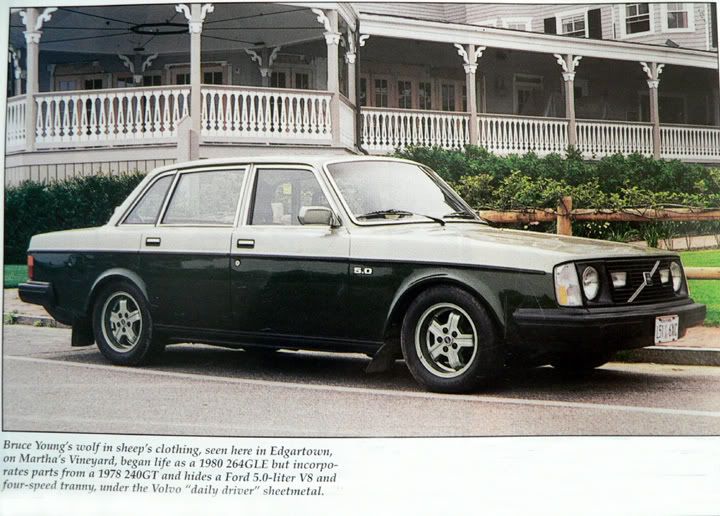
Bruce Young
'93 940-NA (current) — 240s (one V8) — 140s — 122s — since '63.


  REPLY TO THIS MESSAGE    PRINT   SAVE 

Really bad pinging problem with 87 octane gas 200 1979

Obviously, something changed dramatically. You would have to shave the head significantly to get enough of a boost in compression to cause a dramatic increase in pinging, so that's not a likely cause.

Without a manual here I'll guess that a '79 did not have a knock sensor, so that rules that out.

Looking at things that cause knock (pinging), three primary causes come to mind - an overly lean mixture, overadvanced spark timing, and high ambient (intake charge) and engine temperatures. A less common cause is carbon deposits in the chamber, but since you just had the head redone I doubt that's a cause. So what has changed relative to mixture, timing, and temperatures? Consider:
- is there a vacuum leak anywhere, causing a lean mixture? Pull the plugs and look at them. A bad vacuum leak will have you using more throttle, and gas mileage will suffer.
- you changed injectors and a fuel pump. Are you sure enough fuel is being delivered?
- you probably pulled the distributor when the head came off. Is it re-installed correctly, AND is your timing correct? Is the cam properly timed, relative to the intermediate shaft and crankshaft?
- is your coolant temp showing a normal indication? Is there a chance there are air pockets in your cylinder head? Does the thermostat open at the correct temp?

Last thought is the gas itself. Are you in a geographical area where the gasoline formulation recently changed? Have you tried changing brands of gas, or gas stations? (You can never be sure about what off-brand gas dealers pump.)


<< < > >>


©Jarrod Stenberg 1997-2022. All material except where indicated.


All participants agree to these terms.

Brickboard.com is not affiliated with nor sponsored by AB Volvo, Volvo Car Corporation, Volvo Cars of North America, Inc. or Ford Motor Company. Brickboard.com is a Volvo owner/enthusiast site, similar to a club, and does not intend to pose as an official Volvo site. The official Volvo site can be found here.