posted by
someone claiming to be Roger
on
Mon Jan 24 13:30 CST 2005 [ RELATED]
|
|
My '93 240 wagon has a problem starting in the cold, apparently. When you try to start it you get an initial start and a few seconds of rough idle (just a few) and then the engine dies and I can't restart it even if I run the battery dead trying. While cranking it tries to start and does best with the accelerator pedal depressed about half way, and when it does fire like it is going to start, it is so rough it is not like starting at all - just like random firing. If I let it sit about an hour it will do the same thing all over again - initial start for a second or so, then dies, then can't be restarted. I replaced the ignition coil, distributor cap, rotor, plug and coil wires, plugs, rpm sensor, air filter. Starting fluid does not seem to help. On warm dry days it fires right up and runs beautifully.
Any ideas?
Roger
|
|
|
|
|
Roger-
I have been having the exact same problem with my 93 240 wagon. You described my symptoms down to the smallest detail. I thought it was the AMM...and it's a little better with a new one, but not a huge improvement. Did the AMM do it for you? Other solutions?
Thanks,
Ryan
|
|
posted by
someone claiming to be Roger
on
Wed Mar 9 00:54 CST 2005 [ RELATED]
|
|
Ryan, I never did install a new AMM. Instead I put lots and lots of water remover / fuel treatment in the gas tank and burned through several tanks of gas with this syuff, on warm days when I could get it started and have it run fairly reliably. That seemed to help a great deal but on a really cold day I will still have a cold start problem / cold idle problem, and I get a little bit of relief just by unplugging the AMM. Then it will start in "limp home" mode and I can get it warmed up enough to plug the AMM back in, which will then improve the idle. I still don't understand. On warm days this car starts and runs beautifully. It has this problem only in very cold weather. My daughter got stranded by it this morning. I went to where she was, unplugged the AMM, and it fired right up and I warmed it up, replugged the AMM and it was fine.
Why would the AMM fail only in cold weather? It is not a temperature sensing device that I know of. Why would it run so beautifully in warm weather? Why does it work fine on frigid days after just a few minutes of being unplugged? Is it really a problem with the AMM at all?
So, dude, I solved about 90% of my problem with the gas line dryer additive. Now I have this periodic lesser problem of unplugging the AMM to get I started and warmed up.
Any experts out there have any ideas?
Roger
|
|
posted by
someone claiming to be Roger
on
Thu Feb 3 02:01 CST 2005 [ RELATED]
|
|
Thanks for the tips. I unplugged the AMM this morning and she fired up and sustained running, somewehat rough, but she warmed up to a fairly regular idle eventually.
How is it that the engine can run without the AMM plugged in? I did get a fault code when I unplugged it. I'm just curious if someone can explain the "physics" of what was happenning before (with AMM failure, plugged in), and how unplugging the AMM made it start. Does the AMM air plate fail "shut" and the fuel-air system gets no air and floods out? Then, if you unplug the AMM, does it fail "open" so you can get a start even with a bad fuel-air mixture? I'm looking for some understanding - did I guess right? Knowing stuff like this helps troubleshooting in the future, beyond just blindly plugging and unplugging things, spraying ether, cleaning sensors, etc. But I am still very grateful for the advice, and I am seeing my '93 back on the road very soon when a new AMM arrives.
Roger
|
|
|
|
|
Condensation in your fuel, freezing in cold temps. Get your car into a warmer place so the ice can thaw. Add a bottle of dry gas for your next few fillups, and then monthly after that until overnight temps are consistently well above freezing.
At the risk of repeating myself - and not accusing you of this - but I keep running into people who rarely FILL their gas tanks. The empty space above the liquid gas in a tank is vented to atmosphere, and in climates damper than my current desert home there is a surprising amount of water vapor in the air. When the ambient temp dips below the dew point, the water vapor condenses in the tank and sinks to the bottom, since water is denser than gas. Then when the temp dips below freezing, trouble can happen - it only takes ONE drop of water to freeze in the wrong place, and it's "all stop" time. Filling the tank frequently minimizes the likelihood of condensation forming, although if you live in a cool or humid climate, frequent use of dry gas is really a good idea.
A second reason to fill the tank rather than adding five bucks worth of gas is that the in-tank pump relies on being immersed in fuel for cooling. Consistently running on a fraction of a tank will measureably reduce the lifespan of the in-tank pump.
|
|
|
|
|
Unplug, clean, replug all sensors. Check the codes stored on your computer.
Klaus
--
98 V70Rawd(101Kmi), 95 854T(85K mi), 75 164E(173K mi)
|
|
posted by
someone claiming to be Swedish Babe
on
Mon Jan 24 16:54 CST 2005 [ RELATED]
|
|
Try disconnecting your AMM, then start. If it starts and idles fine then you have a bad AMM. Good luck.
|
|
posted by
someone claiming to be Roger
on
Thu Feb 3 02:03 CST 2005 [ RELATED]
|
|
Bingo. Thank you! Why does it work this way? I would have thought that unplugging the AMM would make any problem worse. Can you explain?
Rog
|
|
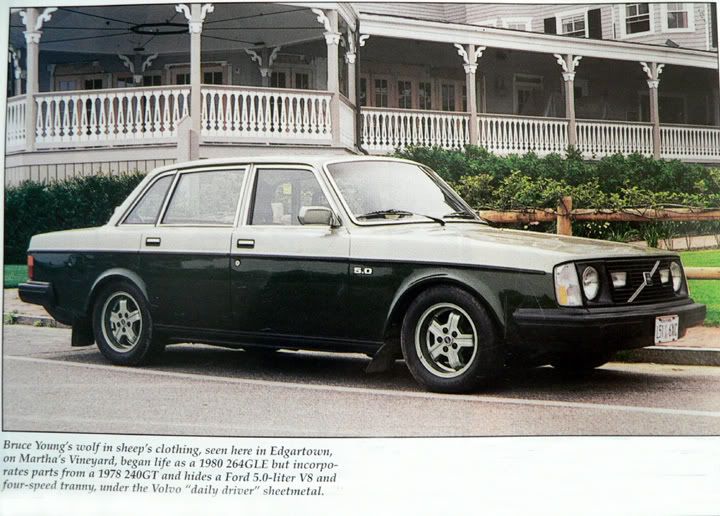
|
|
...Don't rule out a poor/corroded contacts in the AMM connector plug. Look to see that they are all aligned the same, and appear to have equal tension.
Some advocate spraying with contact cleaner, followed by application of dielectric grease as a corrosion barrier.
The "bad AMM" is sending wrong (or missing) signals to the ECU. Controlling the FI operation based on the bogus AMM input causes the no-start (i.e. too lean possibly).
When unplugged, the ECU sees no AMM signals and defaults to "limp home" FI settings, which allow starting but poor running (which may improve once warmed up?).
--
Bruce Young
'93 940-NA (current) — 240s (one V8) — 140s — 122s — since '63.
|
|
posted by
someone claiming to be Roger
on
Mon Feb 7 00:50 CST 2005 [ RELATED]
|
|
I see, it's the "limp home" mode default that works.
I think my AMM might be making the engine run too rich because I get a lot of black smoke and black sooty deposits coming out the tailpipe, like unburned fuel. This stops when the engine warms up. An AMM that was not allowing enough air could make it run rich, but so would a sticky cold-start injector, but I can't seem to find a cold-start injector on my 1993 240. They were obvious on the 140s and early 240s but I don't see one on mine. Has the cold start injector been replaced with a computer/sensor enriching of the fuel-air ratio instead? If so, I wonder what could be making it run rich when cold other than the AMM. Once I get it started and warmed up it runs fine, even with the AMM plugged in. It's only the cold starting that is a problem. I unplug the AMM and it starts, run roughly, warms up, then I can plug the AMM back in and it runs as smooth as it ever did.
I am also woriking with the suggestion that there might be water in my gas freezing in a fuel line and I have been running gas dryer and injector cleaner through it, just letting it sit and burn gas for hours at a time to get this possibly contaminated gas out of it. That's when I noticed the black sooty deposits all over the rear of the car and under the exhaust pipe on the ground.
Maybe I have water in the gas and an unreliable AMM. Possible?
Roger
|
|
|
|
|
Hi Roger,
Other than suggesting an AMM swap as a test, here are my recap observations and thoughts at this point:
1/24 "On warm dry days it fires right up and runs beautifully".
• That seems to rule out a false cold temp signal from the Engine Coolant Temp (ECT) sensor to the ECU, which was my first thought on reading today's post.
2/3 "I unplugged the AMM this morning and she fired up and sustained running, somewehat rough, but she warmed up to a fairly regular idle eventually".
• Afraid I can't explain that, except that the absense of the AMM is apparently the key to starting in your case. I really don't know enough about the AMM's electronics to take it any further. Hopefully Art Benstein will ring in on this thread.
2/7 "I think my AMM might be making the engine run too rich because I get a lot of black smoke and black sooty deposits coming out the tailpipe, like unburned fuel. This stops when the engine warms up."
• That's what made me think of a bad (or unplugged) ECT—except that you said, "On warm dry days it fires right up and runs beautifully". I think a bad (cold) ECT would be consistently bad, and not weather sensitive. Unless it's failing HOT, which I've not heard of, but am now considering. Maybe a sensor wire grounding out?
2/7 "An AMM that was not allowing enough air could make it run rich, but so would a sticky cold-start injector, but I can't seem to find a cold-start injector on my 1993 240. They were obvious on the 140s and early 240s but I don't see one on mine. Has the cold start injector been replaced with a computer/sensor enriching of the fuel-air ratio instead?"
• The AMM doesn't affect air intake, only fuel mixture. And yes, the ECU does lengthen injector pulse time for richer cold starts and running, based on input from that ECT I keep thinking about, save for those "warm dry days".
2/7 "If so, I wonder what could be making it run rich when cold other than the AMM. Once I get it started and warmed up it runs fine, even with the AMM plugged in. It's only the cold starting that is a problem. I unplug the AMM and it starts, run roughly, warms up, then I can plug the AMM back in and it runs as smooth as it ever did."
• I agree, it does seem to point to the AMM, although the failure symptoms differ from those few that I've actually experienced (usually no excessive fuel indications). A false COLD ECT signal would give trouble in any weather, and a false HOT ECT (i don't recall ever hearing of this) would make it too lean for colds starts. Now that does fit your case except how does it then get so rich? Is it perhaps the AMM trying to compensate for a bogus Sahara signal from the ECT?
As I said, I've never heard of an ECT failing "HOT", but it could be checked by reading back from the ECU connector with an Ohmmeter. Do you have a digital multimeter? Even a cheap one?
That's as far as I can go right now. Hopefully wiser heads will come forward. I doubt there are any older ones lurking about.
Bruce
--
Bruce Young
'93 940-NA (current) — 240s (one V8) — 140s — 122s — since '63.
|
|
posted by
someone claiming to be Roger
on
Mon Feb 28 00:33 CST 2005 [ RELATED]
|
|
THANKS for all the help.
|
|
|
|
|
I don't know if you've fixed your problem, but I had the exact same issue with the same symptoms on my 93 240 and I finally determined it was the fuel pressure regulator. A friend told me to pull the vacuum line going to it, and if you smell gas there, the regulator is bad. I replaced it, and the hard starting vanished.
|
|
posted by
someone claiming to be ROGER
on
Sun Apr 3 06:14 CST 2005 [ RELATED]
|
|
After replacing a load of expensive ignition and other stuff it turned out that I had two problems: (1) the fuel pump was not maintaining suffucient pressure, and it was particualrly aggravated on cold days when the seals were stiff and the pump was providing even less pressure; (2) rebuilt AMM was bad and kept giving AMM fault codes.
A local shop I trust finally troubleshot this probelm for me and fixed it, but in the interim I replaced plugs, plug wires, distributor cap, coil, crankshaft sensor, AMM, fuel pressure regulator, resoldered fuel pump relay, cleaned and checked the idle air control valve, ran at least a quart of gas dryer through multiple tanks of gas, etc.
Anyway, the car runs like a charm now. It starts readily, idles perfectly, and runs so much stronger than it has in over a year that I am astonished.
Lesson - look at the fuel pump, and don't trust all rebuilt parts.
1993 Volvo 240 with 185,000 miles.
Roger
5 240s total (us and the kids . . . .)
|
|

|
|
I'm always grateful to hear any final outcome post that accurately explains the original symptoms. Noticed your sig and the 5 240s. We and the kids have eight all told, but it was the very first one that goaded me into obtaining a way to measure fuel pressure at the rail. I am always surprised by the disparity between the money that goes into guesswork replacement parts compared with that spent on diagnostic tools and literature.
I spent (or wasted) a lot of time rummaging through the fittings at auto parts stores looking to match those M14 line connections to a pressure gauge, before finding this forum. The suggestion I received was to make an adapter from a junkyard rail. Now that I have it, pumps, check valves, leaky injectors and defective FPRs don't dare enter into our maintenance mysteries.
By the way, rebuilt parts are not to be trusted: consider the economics of the reman industry- originator of the "lifetime" guarantee.
Again, anyone who helped on this is grateful for the feedback, as am I, even though I missed it.
--
Art Benstein near Baltimore
|
|
|
|
|


