|
|
|
Hello Everyone,
About a week ago, I noticed that all of the warning lights along the bottom of my Volvo’s (1988 740 GLE Wagon) instrument panel were flickering--see post at http://www.brickboard.com/RWD/index.htm?id=927677
I parked the car and pulled the panel out just enough to feel for any disconnected wires, but found none. After this effort, the instrument panel went completely dead, except for the clock.
I resumed driving, and within 20 minutes, the car started to lose power. Fortunately, I was near a Wal-Mart where I purchased a battery to have enough power to get home. The next day I took the car to my local parts store. They checked the alternator and discovered that it wasn’t charging the battery. However, after replacing the alternator, the problem persisted. The battery was still not charging, and the instrument panel was still dead.
A few days later, I followed the suggestion of a Brickboard member who had experienced a similar problem. I removed the instrument cluster and checked it in detail for any breaks in the flexible circuit board. On the back of the cluster right behind the speedometer, there is an exposed part of the circuit about a 1/4" long. I discovered that this exposed part of the circuit had broken.
After rigging a wire to complete the broken circuit, all of the instruments worked. I took the car back to the parts store and had them test if the alternator was charging the battery. It was. The problem seemed solved.
Unfortunately, yesterday, the warning lights along the bottom of the panel started acting up again. I checked my rigged wire, and it’s still in place. The alternator still charges the battery.
When the car is idling, the warning lights in the instrument panel will begin flickering. As I pull away from a stop, the flickering continues until the motor reaches about 2500 rpm--then the flickering will abruptly cease. About 10 seconds later, as I am under power at about 1500 rpm, the flickering will start again. I have to rev the motor up to 2500 rpm to clear the flickering.
It seems that when the car becomes warmed up, or a heavy load is placed on the electrical system, the problem intensifies. Several revs to 3500 rpm are often needed to stop the warning lights flickering.
Recently, I have had difficulties with the car’s headlights, which may offer a clue the cause of the electrical problems.
I noticed in the past few days that the low beam is very dim on the right side and the filaments of both high beams glow, even when the low beams are on. When high beam is engaged, the right side headlights don’t work at all. I have changed the bulbs and the problem persists.
It’s worth noting that about a week or two before any of the difficulties with the instrument cluster began, I had to replace two headlights--a high beam from one side and a low beam from the other side. I have since tested the headlights that I replaced and have discovered that at least one of them works.
Also, within the last day, I have heard a distinct click--almost like a relay engaging--whenever I turn on the headlights. The noise is not coming from the headlight switch itself, but from the region around the fuse panel just in front of the gearshift.
A further clue to the difficulties may be found in the clock within the instrument cluster. Before these difficulties surfaced, the clock didn’t work. Now, it keeps perfect time.
Does anyone have any ideas as to what might be causing the flickering in the instrument panel and the problems with the headlights?
Thanks.
--Megan
|
|
|
|
|
Both other posts have good ideas.
Here's what happened to the right outside headlight on our '88 745 GLE.
My daughter went for an inspection sticker and got one easilly. The next day she told me a headlight was out. I got a new one and went to replace it and found out that it was unplugged.
I was surprised because they are quite hard to unplug. I connected it and found it was out, then I tried the new one - not working either.
What I figured happened was that the inspector found it out, but also found that a new one did not work, then he decided that he did not have time to fool around, so he gave up and forgot to plug it in.
After some troubleshooting, I then soldered in a new plug, noting that the copper strands were quite black and hard to clean. The repair did not work. I cut the wires back a foot or so and found that the copper inside the wire was very corroded.
I went to a pick & pull and took about 4 feet of harness out of a wreck. When I cut the old wires back 4 feet and spliced in the replacement, the problem was solved.
Your brick, like our '90 744 TI (we sold the 88) is probably going to suffer some electrocal corrosion and ground issues. Recently our '90 stalled whenever I put on the high beams - It was in the FAQ!!! Bad ground in the left front fender. The high beam was sucking up all the ground available and there was none left to run the power stage.
Once I cleaned the ground, everything was OK. My favorite 740 tech told me to clean and apply dielectric grease to all grounds and connectors that I could, and to put on a zip-tie to hold all connectors together.
I am doing this, one connector each week so that if something acts up, I'll know which one it is.
I'll bet that your brick needs the same treatment. It is not really difficult and will give you some satisfaction as you bring your brick into better health. Good luck.
--
'96 855R, 95 855, '95 854, 90 744TI 377,000 miles on 7 bricks
|
|
|
|
Megan,
For the headlight issue, make sure you have good ground connections on the right front inner fender. I think you will find 4 or 5 push-on connections to a "grounding plate" there. When the normal ground is "open", the current wanders thru the other filament (High), to the left side High, and to the left side grounding plate. If you find a right side problem, the left side should be checked too.
On the alternator -- as you learned, there is a connection from the instrument warning lights to the alternator. This is the required "starting current" for the alternator to begin "charging" (ie, putting out voltage higher than nominal battery voltage). This circuit is only required at start-up.
The warning light flickers mean that (momentarily) the alternator voltage is falling off, and battery voltage is powering the lights (just like when you turn the key ON, but the alternator hasn't moved yet).
This could be due to loose slipping alternator belts, the alternator B+ Red wire or ground wire connections (Don't mess with B+ connection until the battery negative has been disconnected). Or,less likely, it may be a slipping Harmonic Balancer, the big main pulley. The outer part of the HB is rubber-bonded to the center driving hub. With age, the rubber bond can separate and slip -- losing belt drive momentarily. This may also make a squealling noise, like slipping belts, and a hot rubber smell.
I'm more at home with 240s but hope this will help,
Bruce
--
Bruce Young
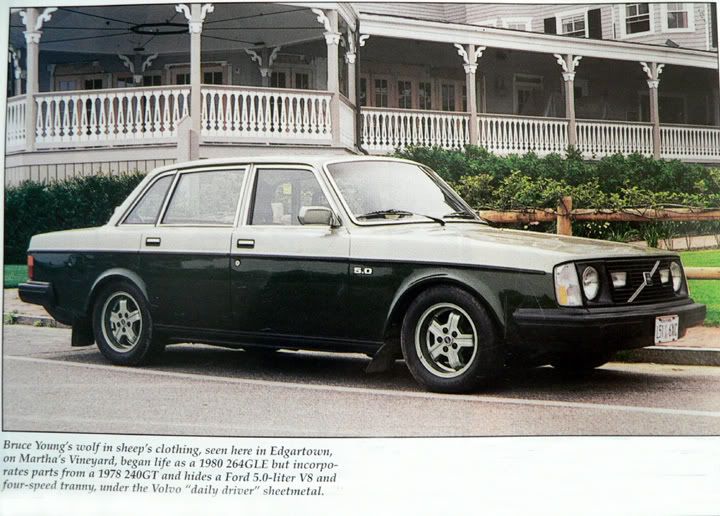
'93 940-NA (current) — 240s (one V8) — 140s — 122s — since '63.
|
|
|
|
|
You should check your battery cables for good contact. Confirm that your ground is not corroded at the engine block
|
|
|
|
|


