|
|
|
Hi,
I've got a '95 960 with 147,000 miles on it, and I'm about to replace the brake pads on the car. I've never done this job, but I have done many car repairs in the past. Any tips on this specific car that anyone may know of? If you know, are there any special tools I might need for this job?
One more question: For some reason, my rotors keep getting warped on this car. Is that normal and does it lead to faster pad wear?
Thanks!
|
|
posted by
someone claiming to be sredwine
on
Fri Apr 29 06:38 CST 2005 [ RELATED]
|
|
Make sure to replace the rear pads even if you have a little pad left (2-4mm).I put off changing these for a long time since the wear rate is low and kept getting an odd grumble (not a pulsation)in the brakes only when stopping from high speeds (above 45 mph).It always felt like it was the fronts,but returned shortly after installing new pads/rotors on front!Just recently,rear pads were down to the metal-replaced them and that grumble is gone!Something (glazing?) apparently happens to these.Im posting this separately for 960/V90 owners who have complained about just this symptom of late.
|
|

|
|
Before you start, a day or hours before, spray the calipers, wheels, wheel wells, front end parts, springs with your favorite general purpose cleaner then blast it with a hose to lessen the nasty brake dust, dirt and road kill bits. I find when bleeding, using a clear thin plastic hose helps verify that you’re not allowing bubbles back into the bleeder valve and to make sure there are no bubbles coming out. I had to stretch the end of the tube to make it large enough to fit over the bleeder valve by heating it on the stove and stretching the end using needle nose pliers.
--
Tom F. Couple of Volvos Mods, RainX & cup holders.
|
|
|
|
|
Ok, stupid question time, but like I said, I've done repairs before, just never brakes. Is bleeding a neccessary step in changing just the pads?
|
|
posted by
someone claiming to be hillbilly
on
Fri Apr 29 04:27 CST 2005 [ RELATED]
|
|
I guess that I'm just lazy but I never bleed the brakes if I'm just changing pads. I will open the bleeder when I'm pushing the caliper piston back and close it immediately when it's retracted just to keep from pushing old fluid back into the line. Other than that, I just replace the pads and inspect the other components.
steve
|
|

|
|
Only necessary if you want to avoid problems later! Just VERY GOOD practice.
Brake fluid is hydroscopic, that is, it attracts moisture from the air which in turn will cause the components in contact with the fluid to rust/corrode. With a pressure bleeder of your choice and $10 worth of new fresh brake fluid you will avoid replacing $100+ calipers or other more expensive brake parts. With the pressure bleeder you will only add about 1/2 hour to the process.
--
'96 965, 16' wheels, rear 18mm bar & Koni + 204HP cams at 125K. Had '85 745 Turbo Diesel for 200K.
|
|

|
|
The pads are a piece of cake to replace on this car front or rear. After the wheels are removed, only one bolt needs to come out.
It's also a good time to check all the suspension components for wear.
Make sure you torque the wheel studs evenly to 63 ft.lbs. to prevent rotor warping. This is a commonn occurance on this car and I have found that is is most often due to incorrect/uneven torquing of the wheel studs.
I concur with the other recommendation to flush the brakes.
Make sure you reuse the shims on the front/inboard pads to avoid squealing.
Make sure all the pins and slides are lubed with high temp synthetic grease.
If your not going to flush the system, then clamp the brake hose, open the bleeder and retract the piston. Then close the bleeder, and remove the clamp. This procedure will avoid pushing bad fluid back into the ABS controller or the master cylinder.
FYI : The Motive Power bleeder cost me $39 and you won't believe how easy it is to use. Very cost effective IMHO.
DEWFPO
--
1998 S90 071,245 and 1995 964 154,100
|
|
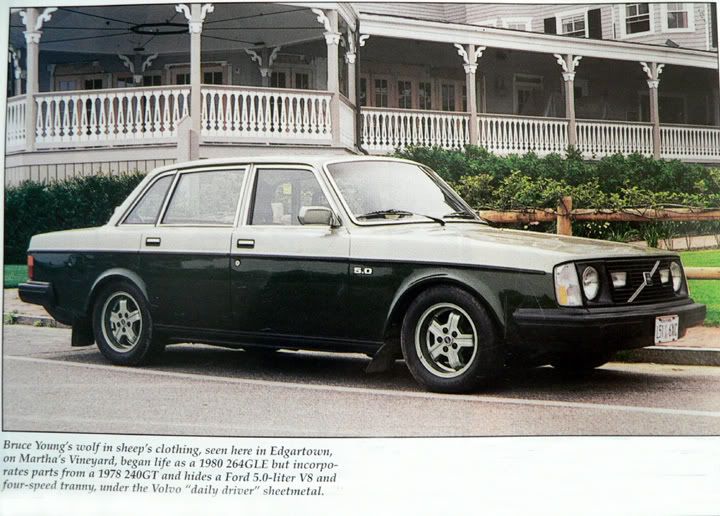
|
|
"If your not going to flush the system, then clamp the brake hose, open the bleeder and retract the piston. Then close the bleeder, and remove the clamp. This procedure will avoid pushing bad fluid back into the ABS controller or the master cylinder."
I don't mean to start a feud here, but I will never clamp a brake hose. If the Volvo procedure is followed (open bleeder while retracting piston), the "path of least resistance" will be out the bleed hose. I don't believe there will be any "upstream" migration — and the hose has a semi-rigid inner liner that is not meant to take that kind if force, IMO.
I believe this idea came from a well-meant FAQ tip a few years back, but it's not in the Volvo 700/900 brake service manual, and actually warned against by GM and Ford (see below):
BIG 3 BRAKE SYMPOSIUM 2002,
(excerpted hose clamping comments)
• GENERAL MOTORS PRESENTATION, Russ Dobson - GM Service Operations, Warren Tech Center
o CLAMPING BRAKE HOSES? GM says NEVER! Risk of damaging hose too great.
• FORD PRESENTATION, Garrett Van Camp & Chris Oakwood
o CLAMPING BRAKE HOSES? Ford does not recommend clamping hoses. . . This may damage the hose and increase the risk of hose failure.
P.S. If you're opening a brake line for any reason (ie, removing a caliper), you don't need to clamp (or even plug) the hose/line then either. Just start by opening a bleeder and blocking the pedal down. The reservoir ports will be blocked by the MC piston and no fluid will escape. This is in the 700/900 brake manual (but not explained).
--
Bruce Young
'93 940-NA (current) — 240s (one V8) — 140s — 122s — since '63.
|
|
|
|
|
Ditto... I wouldn't clamp the hose. Probably damage or crack the brake line, then you'd be in for a major repair pain.
Just loosen the drain plug on the caliper.
Good idea to flush the fluid first though... using one of those IPD power flushers. Costs $28... makes it real easy.
|
|
|
|
|
If you haven't flushed the brake fluid, now is a good time to do it. Get one of the pressure bleeders to make the job "ever so much easier". I just got the IPD one a couple years ago and wish I had done it many years ago. With fresh fluid every couple years the master, ABS unit and calipers should last forever. Get that old corosive moisture laden stuff out of there!
--
'96 965, 16' wheels, rear 18mm bar & Koni + 204HP cams at 125K. Had '85 745 Turbo Diesel for 200K.
|
|
|
|
|
I used a ziplock plastic bag taped to a 10" plastic drain pipe to collect the extra brake fluid when you squeeze the calipers. Probably helps to add in about 3 ounces to keep the pipe from sucking back air. That way you can use both hands to concentrate on pushing back the calipers.
I used a block of 2x4 wood and a crowbar to push back the calipers on my 940 single piston. It was murder to budge with just a pliers.
Read up all the tips in the FAQ.
I did the rotors on mine... took a long time to do both. Next time will be quicker though.
|
|
posted by
someone claiming to be hillbilly
on
Thu Apr 28 04:10 CST 2005 [ RELATED]
|
|
I've never owned a 960, although I now own a 91 940 (wife's car). If the brakes are the same, there is one thing in particular to pay attention to when replacing the front brake pads. The calipers are mounted and slide on two round pins as the brakes are applied and released. If these pins become rusty or bind the brakes will not fully release when you release the pedal. This will cause the brakes to become hot and lead to faster wear and warped rotors. I had this problem on my wife's car, and being a 240 man, I at first didn't recognize the problem. With the pads out, you should be able to easily slide the caliper back and forth on the pins. If you can't, remove caliper and pins, free them so that they will move, and slightly grease them before re-installing. I use a silicone paste grease on mine. I scratched my head several times before I understood this problem and it's associated symptoms. Hope this helps.
Steve
|
|
|
|
|
Steve
Thanks much, exactly the kinda thing I was hoping to hear about if it was present. I would guess that the 940 and 960 are alike in most areas.
|
|
|
|
|
Make sure you clean and lube those caliper bracket pins and inspect the boots....changing the fluid every two years is mandatory....check the torque on the wheels, causes warpage....check the control arm bushings for wear......plenty of brake cleaner to keep the dust down....quick job when you get the hang of it!
|
|
|
|
|


