|
|
Can anyone suggest a reason why I should not add a cylindrical (B20 style) coolant expansion tank on my B4B and if this may help with an overheating condition? On very warm days like we've been having in Ontario (above 85F) and with my 2-bladed fan, the coolant seems to want to blow past the pressure cap. This lowers the already small coolant capacity and causing the engine to overheat.
When the outside temperature is in the 70s, I have no problems at all. I did replace the thermostat recently with a proper style for this engine, a 170F I think. Since a stretch of above normal temperatures is relativly uncommon and short, I do not want to consider any extensive upgrades or modifications to the radiator or the fan. Since the honeycomb radiator already has an overflow tube running down the side, I thought this could be attached to an expansion tank, catching the overflow, creating a semi-sealed system and allowing me to add more coolant.
Has anyone tried this with a B18 or older Volvo engine and did it make any difference or improvement? Will I be doing something that may be harmful to this older style engine; i.e. higher temperatures or pressures? I do have this same problem with my B16B Amazon-S, but the radiator seems to be larger and I have replaced the 2-bladed fan with a 4-bladed fan when the temperature rises above 85F.
--
Cam a.k.a. CVOLVO.COM
|
|
|
|
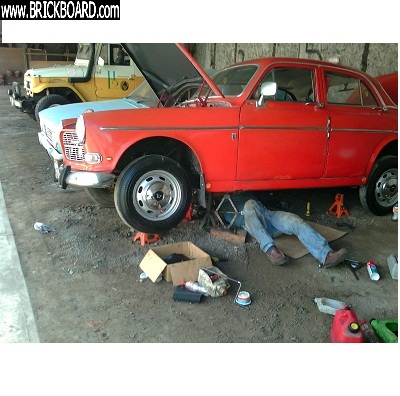
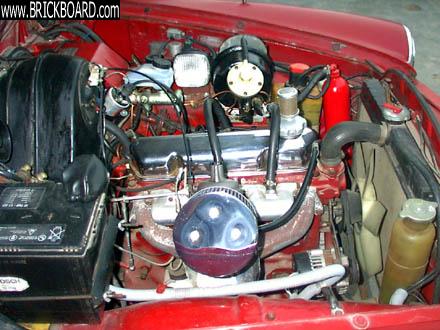
Yes (about the B18 question). Two years ago I adapt a coolant reservoir and set a 6 lb pressure on reservoir cap (and 20 lb on radiator cap - original design require a full closed cap, but I believe 20 lb cap buy a bit of safety). Also a 8 blade fan was added. Up today so good so far (and the summer on our coastal city usually is hot, due el Niño - a summer ocean flow):
--
Joaquin (yogui the bear) / Rojo 121 / Lima, Peru
|
|

|
|
I would say go for it... whether or not it helps with the car running hot I don't know, but keeping the fluid level topped up is a good thing.. both for the car and any animals that might happen upon puddles of antifreeze leftover.
My Jaguar does the same thing... it actually runs nice and cool (very rare for an XK120), but on hot days, after I shut the engine off, it will belch up a bunch of coolant. I carry a large beach towel and put it under the car every time I stop to avoid leaving toxic puddles. I'm definitely planning to add an expansion tank to it...
--
-Matt '70 145s, '65 1800s, '66 122s wagon, others inc. '53 XK120 FHC
|
|
|
|
|
Besides Ron's suggestions and comments, an effective overflow container helps avoid rust and other contaminants in the cooling system by keeping air out. The overflow tube has to discharge under the surface of surplus coolant in the overflow container, so that reverse flow back into the radiator takes in coolant only. For this to work, the radiator cap has to seal against the top of the radiator fill pipe to maintain a partial vacuum in the overflow tube so return coolant flow up from the container will happen. And the cap has to have a lightly spring-loaded seal in it as a check-valve to let this reverse flow of coolant enter the radiator top tank when the engine cools down.
Check your spark timing and that any vacuum advance provision is working effectively. Late spark throws more heat into both cooling system and exhaust. Consider using more advance than specified if the original spec was based on fuel octane lower than what you are using.
C.O. Greenlaw, Sacramento Cal
|
|
|
|
|
Cam;
When you overheat, the boiling causes the coolant level to rise a lot which sends even more out the overflow. An expansion tank WILL NOT cure an overheating condition. It is intended to catch coolant which is expelled out of the overflow due to normally occuring expansion, and which without it would be lost overboard. I think it's a good upgrade*, but again, it WILL NOT solve an overheating condition! Volvos had adequite cooling systems, but their limit can be reached on really hot days, especially if one of the factors or components are off their best performance...
...so you must first determine for what reason you are overheating.
If you are indeed producing more heat than the radiator can shed, then about the only thing that is going to help is to increase the heat exchanging capacity of the rad...like improving the airflow with a better fan like you mention (that's the first thing I'd try...if a fourblader will fit!)...or adding a pusherfan in front, or increasing the rad size, or number of cores, etc.
If you have a decrease in the flow for some reason (i.e. sluggish thermostat, WaPu problem - like corroded-off impeller fins, blockage in the distribution tube in the head, blocked tubes in the rad etc.), these need to be addressed first.
As an emergency measure, you can open your heater core and increase the heat shedding of the cooling system a bit...not so pleasant in the hot weather obviously...
*See: http://www.intelab.com/swem/service%20notes.htm#Cooling%20System
Keep your cool!
|
|
|
|
|
I disagree a little...
The FIRST thing to do is have your system pressure checked, especially the cap.
If you are losing pressure anywhere, it must be fixed or you will never be able to reach "peak" cooling efficiency (and may actually have a real problem, depending on the leak location)!
Increasing cap pressure a little (like from 5lb to 7lb) will increase the BP and give you a little better efficiency (again, only if your system can take it).
Next, check the coolant itself. Is it "old" or not 50/50? Replace is if so.
Last, one particular type of "snake oil" is very effective in the cooling system... Redline's "Water Wetter." It works. SCCA Trans Am mandated "no glycol" in racecars so they used distilled water and... Yup, "Water Wetter."
--
Mike!
|
|
|
|
|
Mike;
So what are you dissagreeing with???
By adding pressure-checking of the radcap to the top list of (your) list of things to check, you are just pointing out an omission on my part. I would also add this to my list, although not necessarilly to the top...I agree the system should be able to hold pressure because this will increase its efficiency, however, as the other poster mentions, it may not even be necessary (he is obviously not at the limit of the system effectiveness and needing it).
I however totally dissagree with your suggestion of using plain or distilled water (with wetter or not)in a vintage volvo...the SCCA doesn't want cars puking glycol antifreeze...in their shortsighted, and politically correctness, are not concerned with corrosion within the cooling system... but I am!...I definately prefer 50/50 anti-freeze mix for the ANTI-CORROSIVES it contains, (and lubricants for the wapu), and surfactant (see below)!
Belinda;
Water wetter is merely a surfactant, which lowers the waters surface tension and allows better wetting of surfaces its in contact with. The next time you wax your car spray some (hose) water on the surface: It beads up because the surface tension in combination with the hydrophobic wax. Then spray some windex, or detergent (like wheelcleaner) on the droplets...they loose their surface tension, and spread out instantly on the surface, "wetting" it totally...nothing more than that...the thing is that 50/50 mix allready has surfactants in it, so you don't NEED them when running mix!
Cheers
|
|
|
|
|
We are cross-communicating!
I disagrees as to what should come first, thats all. And I could have phrased it differently. Yup, checking the system for pressure holding capacity is part of determining why it boils over.
I was not suggesting that anyone should run only water and water wetter, only that the product is very effective and that was the example I chose. By the bye, it has nothing to do with political correctness, ever hit glycol in a corner at 150mph??? Not a pretty experience.
The water wetter does indeed increase the effectiveness of 50/50 glycol based coolant. It is indeed effective at lowering the incidence of "hot spots" in your block and shedding heat at the radiator.
I am sorry Baron but physics will prevail. A fluid held at a higher pressure will have a higher boiling point, period. The overheating problem you solved by going atmospheric, I submit, was "solved" by some other change that was made. Ditto for the PO who may have been masking another issue by using a higher pressure cap.
--
Mike!
|
|
|
|
I agree that some pressure in the cooling system is a good thing. I have no idea what the original system called for, and since this car has the B20 engine and a mis-matched radiator, it will take some figuring to come up with a cap that hold the right pressure for this particular system.
The PO's problem was that she was using a 15-lb. cap and was blowing out new radiators and heater cores. Going with no system pressure cured that problem, but of course the cooling system is no longer as efficient as it could be.
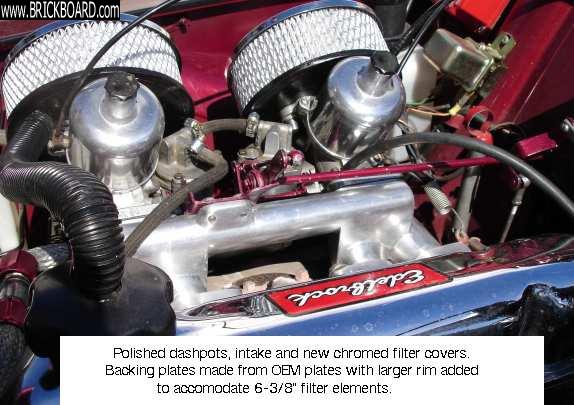
The big overflow tank keeps me from losing coolant onto the road, but it may become passé with a correct thermostat and radiator cap.
Luckily, I don't have to depend on the car for transportation, so I have the opportunity to take things apart for several days at a time.
Lately, even in summer heat, the car is running in the middle of the heat gauge. I probably won't fiddle with the cooling system very much until I have finished up some more pressing jobs.
|
|
|
|
|
What's water wetter? Does this make water more slippery or what? :)
|
|
|
|
|
In response to your original question, no, I don't see any problem with adding an overflow tank to your system is you're only using it to recover blown off coolant. The caveat that you need to keep the intake tube covered with coolant should go without saying.
My PV544 has a B20 engine and what appears to be an early, small radiator. The radiator is somewhat narrower than the frame it sits in, and doesn't have the 'roller blind' tube on it.
Anyway, the PO had continuous overheating problems, and replaced radiators and heater cores constantly. I think - from reading through the mountains of receipts - that her problem was a 15-lb pressure cap, not a design problem.
The system as I use it now (in high desert temps) uses a radiator cap with no pressure valve. The cooling system is totally unpressurized, and the overflow tank I installed holds 1/2 gallon. I installed a 6-bladed flex fan, replacing the stock Volvo 4-blade fan. That helped a lot, so I'm satisfied that my occasional overheating problem was due to poor air flow. The flex fan does not sit any closer to the radiator than the original fan, although it does come pretty close to the alternator bracket bolt on the engine side. A little grinding on the bolt head gave me plenty of clearance while still letting the bracket do its job.
|
|
|
|
|
Here (Peru), many people broke the spring into the radiator cap, leaving it open (0 lbs), this way they remain using rusted radiators an additional one o two years after has its first serious leak (they need to add water more frequently).
--
Joaquin (yogui the bear) / Rojo 121 / Lima, Peru
|
|
|
|
|

