|
|
|
My B230FT motor started yesterday morning and ran for 10 seconds or so before it died and would not restart no mater how long I cranked on the starter. I found that I have a strong spark to the plugs, but when I pulled the spark plugs last night, they were all soaked in gas. I suspect it might be the the fuel pressure regulator (my first inclination) or the radio suppression relay. Or could it be something more expensive??
Has anyone experienced a flooding condition on the B230F(T) fuel injection systems, and if so, what was diagnosed as the cause?
Thanks,
Russell
|
|
|
|
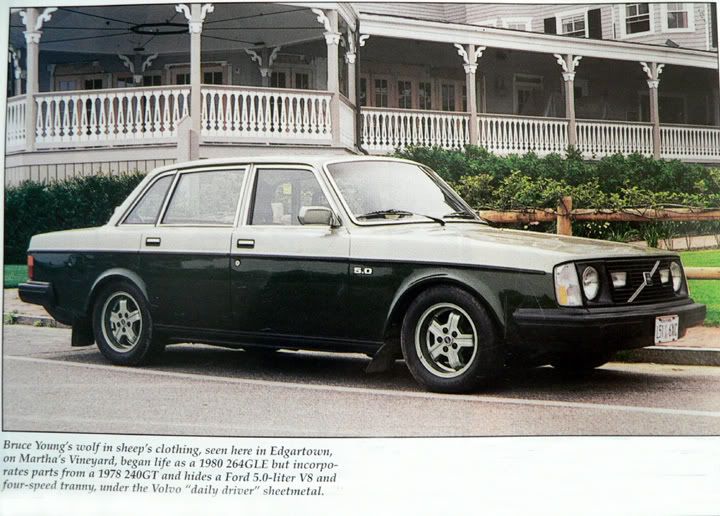
We had one just like this about 2 weeks ago. The timing belt was intact but had jumped a few cogs. Thus the spark came at the wrong time and the plugs got soaked.
The clue on that one was that compression was also off due to screwed up valve timing, so the cranking speed was noticeably faster.
--
Bruce Young
'93 940-NA (current) — 240s (one V8) — 140s — 122s — since '63.
|
|
|
|
|
I've got a 90 745t with the exact same problem. I've replaced almost everything in the engine and this still happens. I've narrowed it down and it seems to only happen when the temperature outside is between cold and hot, say 35 degrees. I replaced the temp sensor (the one for the computer) but will check it this weekend. I even sent all the injectors out to be cleaned (including the cold start injector) thinking that they were leaking, but they weren't. I'd love to figure out what is! On a similar note, I also have problems sometimes where the engine will run fine but will die after about 10 seconds. It restarts ok. Is there something in the LH computer that switches out of "start" mode to "run" mode after 10 seconds? Does anyone know?
Sometimes after it floods I can start it by pulling the wires off of all the injectors and turning it over until it catches. Then putting the wires back on will get it to start, but that only has worked about 50% of the time. Otherwise I have to pull the plugs, disconnect the coil wire and injector wires, turn the engine over a few times, clean the plugs, put back together and go. I can do the whole procedure in about 15 minutes now (done it many many times this spring).
|
|
posted by
someone claiming to be Chrissij
on
Fri Apr 16 12:55 CST 2004 [ RELATED]
|
|
You can just unplug the suppression relay to clean off the plugs; it is what supplies the signal for them to work. Typical problems when a car is running full-a rich is the coolant temp sensor, the air mass meter, the fuel pressure regulator, the fuel computer, or the wiring harness. On a turbo, you can add any of the numerous intercooler hoses. The car is really too young for the problem to be the wiring harness, and besides Margaret Thatcher threw Lucas to the winds in 1989. No more government contracts meant they had to make a quality product. We shouldn't see the problems with the wiring harnesses like we did in the past. If you have had a coolant leak in the past few months to the point your car knew about it, opt for the coolant temp sensor. Pull the vacuum line off of the fuel pressure regulator; if it is wet or smells WAY too much like fuel, this is most likely the problem. If it's the air mass meter, you should have a code for it. Lastly, check all of your intercooler hoses for a hole. Hope this helps.
|
|
|
|
|
Thanks Chrissij,
The temp sensor measured within specs, the pressure regulator vacuum hose has no fuel leakage, air mass meter should default and at least start the car, so I'm about to run out of options. Can I troubleshoot the fuel computer (is that the ECU)? What do the ballast resistors do? I can't even get it started. Damn fuel injectors, why can't they tell me what's wrong??
|
|
posted by
someone claiming to be Chrissij
on
Sun Apr 18 05:23 CST 2004 [ RELATED]
|
|
Oh, ballast resistors are for the injectors. Rather like the suppression relay of old. Not sure why they were left in the schematic, lazy engineer?
|
|
posted by
someone claiming to be Chrissij
on
Sun Apr 18 05:20 CST 2004 [ RELATED]
|
|
On occasion, I have had an air mass meter not go into limp home mode, and yes, it is WAY frustrating. One note I neglected to make...on 90+ turbos, Volvo put this "foam crap" in the air filter box, it will disenegrate and "clog" your air mass meter, and nope, it won't limp home. Also, remember spark that is too weak, will mimick a too rich problem, power stage? Changing the plugs may at least get you started. Disconnect the battery to allow the computer to reset itself. Triple check all those intercooler hoses with a fine tooth comb, and go from there. If all else fails, take the rest of the Sunday off, and go enjoy the great outdoors. Life is too short.
|
|
|
|
|
Thanks again Chrissij,
Oh Yee! I finally got it started on Sat. I haven't replaced or fixed anything, so I'm still concerned what was actually causing my flooding condition. I now suspect the Air Mass Meter was the cause. I was lacking any real "turbo acceleration" during my test drive. At the end of my Saturday shade tree mechanic day, I disconnected the AMM and the engine started to idle much better. So I'm going to locate a good 016 AMM for a change out test drive, replacement, and/or spare. I also want to troubleshoot the air bypass valve, since the motor doesn't kick into fast idle with the air conditioner on. I spent yesterday removing the "funky foam crap" from the air box lid - quite possible the root cause of my problems. I had already discovered it was deteriorated, but left it in place due to lack of time/laziness (I just bought this car). While I was at it, I opened up the air box intake port on the engine side (which was factory plugged). For being a turbo, Volvo sure did restrict the intake. With the air box in stock form, it actually appears that only about 20% of the filter's surface area is passing air.
Peace,
Russell
|
|
|
|
|
Jacob
Have you replaced the fuel pressure regulator? If not, pull the vacuum hose off and see if any gas is leaking past the diaphram and into the intake manifold. I've had that happen on a couple of 240s, but not on this one (not yet anyway). Have you received any diagonstic codes (check engine light)? I have not. It sounds like your able to get your's started. Mine gets so flooded it won't even start. I'm going to check my Air Mass Meter, air filter, and coolant temperature sensor tonight. I may even try your trick of pulling off the injector wires - I hadn't thought of that one yet!
Since my '92 745T doesn't have a cold start injector, I need to find out what Bosch did for a cold start mode instead. That might help give me a clue. I may have to break down and buy Bosch's fuel injection manual.
|
|
|
|
|
RDR will shut down the injectors. Look for a rich condition instead: FPR or engine coolant temp sensor.
|
|
|
|
|
Engine coolant temperature sensor seemed to be okay - no problems with the engine temp gauge anyway. Also, it appears I do not have a cold start injector. I could not find it under the intake manifold, and there was an unused connector on my wiring harness.
If I disconnect the engine temp sensor, will that disable the cold start mode?
|
|
|
|
|
Over in the Engine Temp sensor FAQ, Stephen R posted these numbers for ECT:
] ECT resistance "cold" for LH2.4 systems should be around 6k ohms at 32 degrees F (0 deg C), 2300-2700 ohms at 68 degrees F (20 C), and 200 at 212 F (100 C). However, try checking your ECT wiring: Between pins 13 and 5 at the LH ECU (with sensor DISconnected) resistance should be infinite. Voltage with the ignition ON and sensor connected, measured between pins 13 and 5, should be:
0 C=around 3 volts +/-.5v
20C=around 2 volts +/- .5v
100C=around .3 volt +/- .1v
If these aren't correct, check the connections in the ECT wiring harness. Check engine ground connections at the intake manifold. If the voltage is zero, your ECU is at fault.
---------
Did you get it working properly yet?
Norm Cook
|
|
|
|
|


