|
So just buy a new one, right?
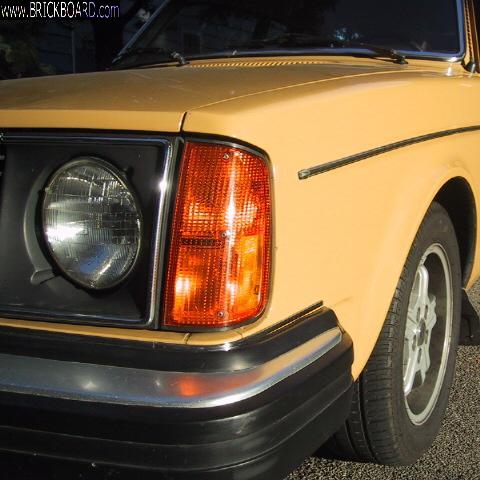
This battery, in my '80 242, is maybe getting a little flaky (or maybe it's just me). It was in the car when I bought it 4-1/2 years ago. There is the usual multiple choice month/year info on the battery but no one bothered to indicate date of sale.
The battery is an Interstate and has run down a few times when the car has sat for long periods. I think this is part of the problem. I have charged it with a 1A charger until I get bubbles in the cells. Possibly I have overcharged it? Lately the car has been hesitant to start if not driven for a couple of days. Starter drags as if bad or not getting enough voltage. But it will start after a few slow cranks. Then after running it will start normally if it doesn't sit for a long time. Yesterday when trying to start it in the morning the solenoid would click but the starter would not engage. After several tries it cranked slowly and then started. I had been driving it fairly often for a couple of weeks prior to this with no starting problems.
I borrowed a Fluke 87 DVOM to run the couple of checks described in Bentley. The static current draw test got results of -1.8 to -7.3 milliamps. That's minus (values). At least there was a minus sign preceding the value on the readout. I wondered if I was using the meter improperly. I am connecting the positive meter lead to the negative battery terminal and the common meter lead to the disconnected negative cable. So maybe I'm not setting the meter properly. I do have the positive lead plugged into the milliamp socket on the meter.
I did the open circuit voltage test after turning the headlights on for about a minute. I got a value of 10.39V. According to the book this means the battery is fully discharged. But why then did I have headlights prior to the test? I checked the battery voltage with the ground cable reconnected and got a similar result, around 10.4V. But I was able to start the engine immediately after that with no problems. So I checked with the engine running and saw around 14V. Then with engine off it was showing 13.4V !!?? Is this a sign of a bad alternator? What the hell is going on here?
I did the two tests on the '89 just for comparison. Static current draw was similar to the '80 but the range was maybe -2 to -14 mA. Once again I'm wondering why the minus sign? I must be doing something wrong. Open circuit voltage was pretty much normal, 12.4V.
What am I doing to get negative readings? I looked in the user's book (again) on how to measure current but it only explains where to plug in the red lead and where to set the dial.
I should probably just go buy a new battery what with the unknown age and history of discharge. But that 10.4V reading followed by the 13.4V reading after running the engine bugs me.
What is going on here?
In the meantime I have disconnected it and am not driving the car.
--
'80 DL 2 door, '89 DL Wagon
|