|
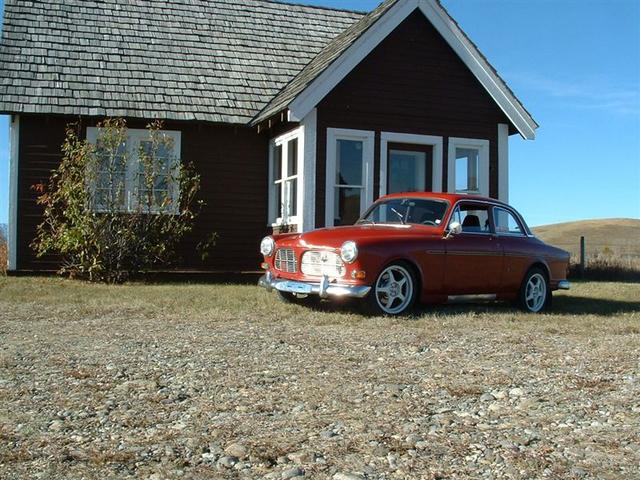
You wouldn't need spacers but you'd most certainly need adapters. BMW Wheels use a 5 X 120 or 5 X 4.72" bolt pattern.
Wheel fitment depends on a number of variables. Here is an article that my partner wrote and will be published on our website in the near future. Of course, it may not be directly related to your question but it may help in determining what wheels are suitable and which are not and why. While it's mainly aimed at 240 and 740 owners, much of the information could be applied elsewhere as well. Hope it helps...
Dale
Wheel Spacer Info:
Chapter 1, Backspacing
Frequently what the determining factor for the widest wheels that can be fit on your Volvo will be backspacing. Offset will be discussed in a later chapter, and while it’s important to steering geometry, if the wheels rub on the strut tube or the inner rear fender, knowing you’ve got the “proper” offset is a rather hollow victory.
Backspacing is the distance from the hub mounting surface to the back of the wheel bead. The easiest way to determine the backspacing of your wheel is to divide the wheel width by two and add the offset. For example, an 8” wide, ET35 wheel has a backspacing of 5 3/8”, or 137mm.
A Volvo 240 can allow a 17” wheel with a maximum of about 120mm backspacing. This dimension leaves a bit of room behind the rim, but not much. Clearly our example wheel has 17mm too much backspacing, so would require a roughly 20mm spacer to clear.
Another thing worth mentioning when dealing with the front suspension is that the strut tube is angled at about 12 degrees from the wheel vertical centerline, so a 15” rim with 1” less radius than a 17” wheel will allow about 5mm LESS backspacing than a 17” wheel. Conversely, a 19” wheel can have a net 125mm backspacing before the rim gets uncomfortably close to the strut tube.
Finally, the amount of steering angle that can be accommodated requires a certain backspacing be not exceeded, and this is further compounded by the tire choice. I can say from direct experience that a 215/45x17 tire on a net 119mm backspacing rim/spacer combination will clear a 240’s inner front fenders at full lock with about ½” to spare.
Chapter 2, Offset
If backspacing is not a problem, offset is the next most important thing to consider in the front suspension. However, offset is not the whole story: Offset built into the wheel, steering axis inclination, and tire rolling radius all combine to give a certain amount of scrub radius. Scrub radius is the distance between the tire centerline and the axis of lower ball joint and upper pivot. Positive scrub radius puts the contact point of the centerline of the tire with the ground outside where the axis of the steering pivot meets the ground, and negative scrub radius has the centerline of the tire inboard of this pivot point.
Scrub radius is what gives the steering it’s “feel”, and in racing cars it’s frequently desired to have significant positive scrub radius. This increases the feedback of the steering (along with the effort) and allows the driver to get a better feel of what the front wheels are doing. A front wheel drive car typically has negative scrub radius, which reduces torque steer. Similarly, most passenger cars (front wheel drive and rear wheel drive alike) have zero or negative scrub radius because during braking where front wheels have unequal traction, the steering is pulled slightly towards the REDUCED traction side, which counteracts the vehicle’s pull towards the side with increased traction, thereby keeping the car going in a straight line without too much driver input.
Negative offset is designed into a wheel to allow the brake assembly to be positioned closer to the wheel centerline, which puts a certain proportion of the total load on each of the inner & outer wheel bearings. Altering the offset too far will alter the loads on these bearings, and a severely compromised offset will require a more frequent wheel bearing service interval. Note that increasing or decreasing offset will put more load on ONE of the bearings, and assuming that the manufacturer got everything right, that means one bearing is now overloaded.
Chapter 3: Wheel Spacer Integrity
Avalanche sells “spacers” that are under 20mm, and “adapters” that are 20mm and thicker. The terminology differentiates between simple shims that get sandwiched between your wheel and hub, and the thicker versions which assume your studs are not long enough to provide adequate engagement with your lug nuts anymore, and use your original studs only to retain the spacer and provide new studs that you bolt the wheel to. All our adapters are hub-centric and wheel-centric, which implies that the load from the wheel to the spacer and from the spacer to the hub are taken up by the large bearing surface concentric with the hub axis, allowing the studs to concentrate their efforts strictly on tensile forces. Many of our thinner spacers are thick enough to allow hub- and wheel-centricity, but when the spacer gets thinner than 10mm, there isn’t enough material in the spacer to provide wheel centricity. On the extremely thin spacers, the pilot on the hub is long enough to allow the wheel’s center bore to bear directly on the hub, giving back that integrity.
One question we’re frequently presented with is one of adapter strength: Is the material between the original stud and the adapter’s stud strong enough to retain the wheel? Obviously this can be a concern for some, especially in racing situations where sticky tires, high G-forces, and high cornering duty cycles can take the toll on the adapter. We use a high quality aluminum (6061-T6 billet) that’s usually orders of magnitude stronger than the aluminum used in the wheel, but for some this is not enough.
It is possible to install longer studs and have us provide a spacer of thicknesses normally reserved for adapters. ARP sells a wheel stud that’s close (Ford Disc Brake application) and is more than long enough to allow the thickest spacers, but usually open-ended lug nuts are necessary unless the studs are trimmed to length. One problem with these studs is that the knurl is slightly too small for the hole bored in the Volvo hubs, and they must be welded into place. Avalanche is working on sourcing a stud that is long enough for the job and has the correct knurl diameter and shank length for Volvo applications, which should assuage the fears of nearly anyone concerned with strength.
Avalanche can also supply true “adapters”, which allows one to deviate from the original Volvo bolt pattern and center bore diameter, and of course custom thicknesses are allowed. Since our spacer/adapters are CNC machined, a unique requirement means a unique design, and a small cost increase is necessary, especially if material thickness or diameter is changed. It’s not possible to adapt a 4 or 6 bolt wheel to a 5 bolt hub, however, unless those bolts are on a REALLY large bolt circle diameter so that they clear the original studs.
Chapter 4, What Spacers Does My Car Require?
Within a given range of wheel sizes, our standard 25/32 spacers are best on a 240 and 25/25 spacers are correct for a 700/900 chassis. However, once the envelope is pushed (or torn) on wheel diameters and widths, the customer must take great care in determining what will fit and what compromises must be made. A 19x8.5 wheel might fit in the front of a 240, but net offset might be limited to 5mm depending on the tire choice, and that’ll put the outside of the tire well into the fender lip, requiring at least an aggressive fender roll or probably even require a body man to stretch or flare the fender. The top of the tire might hit the front spring perch, and if coilovers are being used careful attention must be paid to the length of the spring & the diameter of the threaded body.
If the wheel and tire is already purchased, it’s a fairly simple matter for the owner/installer to attempt mounting them on the car, with or without spacers, and have a look-see. Adjustments can be made with stacked washers to push the tire/wheel outwards, and when the best fit is found, measure the total spacer/shim thickness and let us know your requirements.
If the wheel and tire is not present, a simple jig can be made from angle iron and threaded rod, bolted to the wheel hub, and used to predict where problems might be encountered. Keep in mind that tire sidewalls flex when cornering loads are applied, and this flex can push the tire further inboard or outboard of it’s static position. Similarly, suspension travel, body roll, and bushing stiffness will affect the distance between the inside of the rear tire and the inner fender during cornering and normal suspension motion, so additional clearance is required. The upper shock mount can sometimes get in the way, but trimming the stud the shock is mounted on and/or relocating the shock can alleviate this, however on a lowered car with large diameter rims, the upper shock bolt is not usually a problem.
Fortunately for us, our RWD cars have a fairly small negative offset requirement, and we’ve got a fairly large range of OEM Volvo FWD wheels with fairly high negative offset from which to choose to mount on our cars. There are also a few manufacturers who share our bolt pattern, if not our center bore diameter, and also specify a rather high negative offset, and this broadens the aftermarket base with which to choose from. The trend towards high negative offset on modern cars allows a nice meaty spacer when used on our low-offset cars, giving us the freedom to fit a great number of wheels. Take advantage of this freedom and contact us for your requirements!
Professor Doopoo.
|