|
Hi Steve,
I admit my (our) methods for resolving high NOx are nothing but educated guesswork. The education part is knowing what contributes to NOx (high combustion temps for one thing) and the guesswork is going down through the list of likely suspects, sometimes one at a time from most to least likely. The coolant being added to combustion (as a cause) is a new one on me.
Even with a gas analyzer and a shop full of diagnostic equipment, emissions are not always put right on the first try.
My experience would have had it fixed with the exhaust leaks. Pulling the fuse resets the OBD codes and the adaptive memory in the computer, while executing the button code reset only clears the OBD codes. And driving for 20 minutes, at all speeds, helps it to re-adapt if it needs to, not idling in the driveway.
You won't likely discover something that will blame the intake gasket. The only test I know that would is forcing smoke in - none of this propane, carb cleaner, or even my stethoscope is effective for me except in the grossest of leaks.
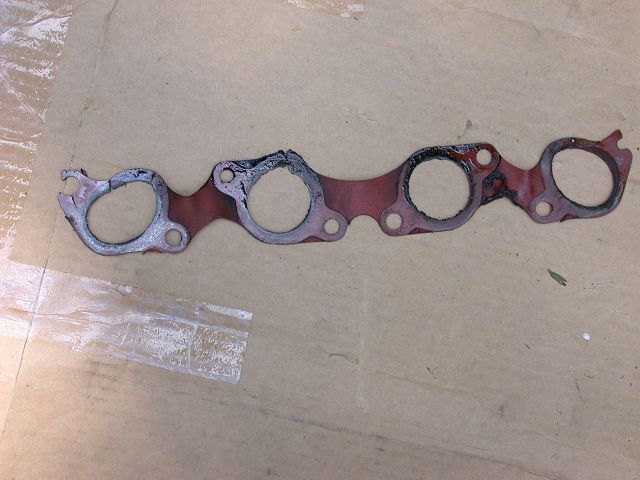
Just change it if it hasn't been done lately. No studs or nuts are going to break on that side of the motor - they are really easy. The worst you'll do is drop one of the nuts and spend time looking for it. No need to disconnect fuel. No coolant need be drained. Just 8 nuts and the one bolt at the support bracket. No gasket sealer to deal with (unless someone was there before you). In my opinion, this is as easy as changing the injector seals, which you've already done.
After pulling the fuse, are you still setting 113 codes? At least you may be able to gauge the effectiveness of your fixes by the OBD indications, instead of the expensive re-tests each time.
--
Art Benstein near Baltimore
What's the use of happiness? It can't buy you money. - Henny Youngman
|


