|
|
|
Hello. Just bought a 1991 Volvo 740 auto with 156,000 miles. Regina system. Problem is it idles way too high(about 2000rpm). No vacuum/air leaks. I triple checked. Thinking problem was IAC(idle air control)(#1389557) valve I swapped in a known good one. No difference. Still idled too high. I unplugged the connection to IAC and now all is fine(about 700rpm idle). Questions : Can I just leave it unplugged ? What would be downside of doing so ? Too rich ? Poor mileage ? What would be causing "signal" to IAC to make it open and thus idle too high ? What should I check(maybe replace)next ?? Thanks.
--
' 88 740GLE auto wagon nearly 202,000 and ' 87 240DL auto sedan nearly 135,000
|
|
|
|
|
First thanks to all for your help. I greatly appreciate it. Seems problem was indeed the temperature sensor(the one for ECU that is under 3rd intake runner). Replaced it and my high idle problem is now gone. Guess these do go bad. Who knows - this might have been the original one. Not too much of a hassle. Actually went smoother then I thought it would. Removed throttle body but not intake manifold. Removed IAC and all hoses. Acess wasn't too bad. Used a long socket extension and 3/4"(thought was 19mm but guess 3/4" is close enough and besides I didn't have a 19mm)deep socket. Thanks again and hope you all have a great weekend.
--
' 88 740GLE auto wagon nearly 202,000 and ' 87 240DL auto sedan nearly 135,000
|
|
|
|
|
Original poster back yet again. OK. So I have tried everything and still have problem. I am thinking it must be engine temperature sensor. Not the one under 2nd intake manifold runner which does dash gauge but the one under 3rd intake manifold runner which tells IAC engine temp. Problem is it is a real p.i.t.a. to get to it. Any easy way to check if it is good or bad rather then replace it ? Any way to easily check/test it ? Maybe at some other point that is not hard to get to ? Thanks but once again for advice/info/feedback on this matter.
P.S. - For those of you in NJ starting Today DMV is closed on Mondays.
--
' 88 740GLE auto wagon nearly 202,000 and ' 87 240DL auto sedan nearly 135,000
|
|
|
|
|
I recently acquired a '90 745 w/Regina with high idle. Turns out the previous owner had monkeyed with the throttle cable, throttle switch, and idle screw to jack up the idle to around 1800 (!) to mask a dead IAC, leaky air intake hose, and a hellacious vibration due to collapsed motor mounts. Check the FAQ and follow all the steps to set the throttle plate, idle screw, etc. back to specs.
A known good IAC, new intake hose, and setting the specs cured the idle problem, and new motor mounts from Tascaparts.com cured the vibration. All's smooth and quiet now.
|
|
|
|
|
Hey Lummer57,
I second Dave's advice with checking the throttle body. If its dirty or out of adjustment, it won't close fully. I had this problem with one of my cars. If its too far open, the idle will be way too high. I would clean the throttle body throughly and adjust it and the throttle switch. The particulars should be in the FAQ.
Regards, Jon
|
|
|
|
|
Original poster back. I was thinking of some other things that could be causing problem. Figured I'd "think out loud" here and get some feedback . Could it be a bad engine temperature sensor and IAC thinks engine is always cold ? However my temperature gauge on dash works fine. Could it be a bad air temperature sensor on hose near airbox(remember I have Regina system) ? Feedback on these two thoughts appreciated or any other ideas / solutions to this high idle problem. Thanks.
--
' 88 740GLE auto wagon nearly 202,000 and ' 87 240DL auto sedan nearly 135,000
|
|
|
|
|
Yes, it could be something like a temp sensor, but in that case you'll typically see a major drift in idle as the engine warms up. Check the 700/900 FAQ here for more information on that problem area.
The idle air control valve is always a suspect when it comes to idle problems, but the prime symptom is usually a fluctuating, erratic or warm/cold sticky idle between 600-1300 rpm. Based on your symptoms and especially as you've done a parts swap with a known good IAC valve then you've pretty much eliminated that thought.
For a high idle in the 1200-2000 rpm range or a widely floating idle it's more likely the idle is simply out of control, i.e. the ECU doesn't even know it's supposed to be controlling idle or is totally unable to control the idle. Typically this means the ECU simply isn't seeing the throttle switch close when you take your foot off the pedal. This is often due to grunge in the throttle throat preventing the plate from fully closing or badly misadjusted throttle body linkage/switch or a loose/open connector or possibly a faulty/sticky switch -in that order of likelihood. I'd start by doing a complete throttle body cleaning and readjustment before looking elsewhere. Look in the 700/900 FAQ here for tips.
--
Dave -940's, prev 740/240/140/120 You'd think I'd have learned by now
|
|
|
|
|
Original poster back again. This morning I cleaned and adjusted throttle body. It wasn't horribley gunked up or dirty. Doing this did not make any difference at all. Still have high idle. Actually now it is even a bit higher. About 1200 rpm in park and about 800 rpm in gear. Also I plugged and replugged all related elecrtical connections(at throttle body, at air box hose, at IAC) to be sure they were clean and seated securely. Now for some reason check Engine light is on in dash. So I am still stymied with this problem. Not sure what to check next. Still thinking maybe temperature sendor on block might be bad or maybe air temp sensor on hose to air box(however when I unplug this connection still have high idle). Any further input/advice/help is greatly appreciated. Hate to have to give up and bring it into the indy shop. Thanks very much.
--
' 88 740GLE auto wagon nearly 202,000 and ' 87 240DL auto sedan nearly 135,000
|
|
|
|
|
I fought that battle with my 87 245. tried everything that you tried. when I replaced the temp sensor, the problem was immediately solved. (of course, many things cause a high idle, but in this case the temp sensor seemed to be my problem.)
It is a Sat morning job. Might as well go ahead and remove the throttle body (again). If you reach over and down you can get a deep well socket (19mm?) on the unit and get it out fairly easily. Use 6 point deep well if you have it. Easy does it.
Be certain you understand how the connector snaps onto the unit before you try to remove it. Study your replacement unit and you can see how it snaps on there. Go slow and easy. You can't see in there for crap. When you put in the new unit, it may not be aligned exactly like the old one so you have to be able to line the connector up by feel.
Work on the car after it has been sitting all night. You want it cold. I also removed the bottom radiator hose and let about a gallon of coolant out, so removing the temp sensor wouldn't flood the engine compartment.
Hook everything back up, add back your coolant,and cross your fingers. After I did mine, I knew immediately that the problem was solved. perfect idle. There is a schematic in Bentley that shows the relationship between that unit and the entire fuel/idle system.
Dow Ford
1987 245 230,000
2001 XC70 160,000
|
|
|
|
|
Original poster again. Thanks to all for reply(s). Rather then replace the sensor(s) one by one (starting with temp sensor, then air temp sensor next, etc., etc.) is there not a way to maybe just find sensor wires elsewhere away from connection and test if sensor is good or bad ? I attempted to do the OBD procedure but that was not very helpful at all. Further thanks.
--
' 88 740GLE auto wagon nearly 202,000 and ' 87 240DL auto sedan nearly 135,000
|
|
|
|
• I don't think the ETC has anything to do with the IAC, compared to fuel mixture. And there are OBD codes related to the ECT sensor, with a check engine light. What was the problem with the OBD procedure?
• The Air temp sensor has nothing to do with the IAC, and will will also set an OBD code with a CEL if it's signal is too high or low.
I know you believe the IAC itself is OK, but a good test would be (with engine at a warm idle) to pinch off the hose leading into it from the big hose at the throttle body. With the ETC air source now cut off, the idle speed should drop to around 500 rpm. Even stalling is OK.
Anything else means air leaking in from somewhere, problems with the throttle linkage, stop screw, etc.
If it does slow down or stall when the IAC hose is pinched off, that confirms that too much IAC air is the problem. That could mean TPSwitch adjustment, bad switch, or harness plug contacts, preventing the ECU from setting the normal idle speed.
--
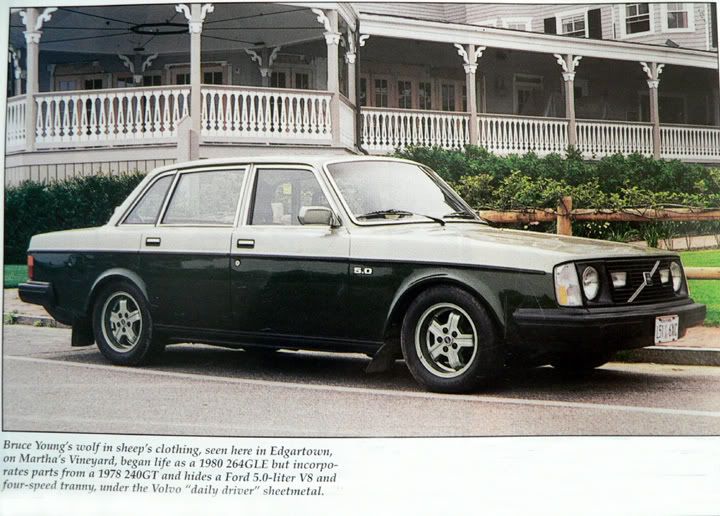
Bruce Young, '93 940-NA (current), 240s (one V8), 140s, 122s, since '63.
|
|
|
|
|
Thanks for your reply Bruce / Lucid. Per Wiglaf's reply yesterday it appears ECT sensor did have effect on IAC or maybe his replacing it was co-incidence with him inadvertantly fixing it by doing something otherwise while replacing it. If I can avoid replacing ECT sensor I would be happy as it appears to be a real pain to get to. I did block off hose from near airbox going to the IAC and yes indeed that slowed down high idle. Although I checked TP switch adjustment already and it was ok I will do that again just to be sure. Switch in it clicks but I guess that does not necessarilly mean it is working ok ? Connection to TP switch is secure & proper. Will again check that too. Wish I had a known good TP switch then I could just replace mine to see if it is the culprit/problem. Thanks for all your thoughtful advice. Much appreciated.
P.S. - Problem with OBD procedure is with me. I just can't seem to be able to read that little blinking light right. Tells me different info each time I do it. Wish it were a solid stable readout. Oh well. From what I read it was in it's infancy back in 1991.
--
' 88 740GLE auto wagon nearly 202,000 and ' 87 240DL auto sedan nearly 135,000
|
|
|
|
|
My suggestion is to print out the OBD procedure and follow it exactly. Don't skip anything, and be sure to follow closely. Although yours is an early version, I have a 91 and had a 90, and they do work and can tell you things.
Also, I did a temp sensor last year. Yes it looks difficult. No, it is not that difficult, and I did not pull the intake to do it, which a famous supplier said was the easy way. It took me about an hour, with a deep socket, a short open end, and some patience. And swearing. But not too much.
I think if you do it, pulling the IAC helps and you can clean it out per the FAQ at the same time.
But as someone else said, drain some coolant so you don't get it all over.
Oh, and check the bottom of the bellows from the air sensor to intake. One of mine developed a hole there.
|
|
|
|
|
You may wish to refer to the ECT sensor testing article here in the 700/900 FAQ.
--
Dave -940's, prev 740/240/140/120 You'd think I'd have learned by now
|
|
|
|
|
I have Regina system so I am not sure that this information is applicable as it is for LH system.
--
' 88 740GLE auto wagon nearly 202,000 and ' 87 240DL auto sedan nearly 135,000
|
|
|
|
|
From what I can tell the same Bosch sensor was used in all the later red block engines so the readings in the FAQ should be applicable to LH or Regina.
--
Dave -940's, prev 740/240/140/120 You'd think I'd have learned by now
|
|
|
|
|
If the "Check Engine" light is on, then you may be able to get some information from the error codes you can check. See the FAQ files about this, and remember, you have a Rex/Regina car, so look toward the end of the FAQ article for the Rex/Regina codes and don't use the Bosch LH 2.4 ones at the beginning of the listing. Check both the fuel computer and the ignition computer for codes.
The codes may help a lot, or they may be useless: The one-year-old, MTC, heater control valve in my 1991 Turbo SE just split completely in two and the car blew out all of its coolant in a matter of seconds (a pretty serious problem, I'd guess, and certainly a good reason to "Check the Engine"). Needless to say, it overheated before my wife could get pulled over and shut it off. The "Check Engine" light went on then, but would not go on after the tow truck got it home. There were no error codes set either.
When you cleaned the throttle body, did you set the throttle plate position properly, as described somewhere in the FAQ? It is a pain in the a$$, but the computer and IAC need the plate to be adjusted just right. Also, did you check whether or not the TPS was set right too?
--
1955 Human, Scott; 1991 745 Turbo, Brunhilde; 1990 745GL, Snuggle Bunny
|
|
|
|
|
Unplugging the IAC and getting 700 rpms does rule out a leak. Does the car have AC? There is a lead from the AC to the IAC to compensate the idle when the compressor is engaged.
Klaus
--
Why are Volvos so endearing? Its just a car.
|
|
|
|
|
Thanks for your reply. This car does have AC. However this high idle problem happens even with AC turned off. Where is lead you refer to ? Only connections to IAC I find are the electrical connection at back and the two air hoses at the front. How do I test this lead ? Thanks.
--
' 88 740GLE auto wagon nearly 202,000 and ' 87 240DL auto sedan nearly 135,000
|
|
|
|
|


