|
I see a lot of convoluted logic about gasoline octane ratings and what fuel to use in which season and type of driving.
The main thing you want to remember is that a STOCK B18 or B20 engine just doesn't need high octane fuel unless it's really in bad need of a tune-up. Good ol' 85-87 octane is just fine!
The higher the octane rating on a gasoline is, the more stable it is; that is, it's less likely to ignite until it gets a good spark from the ignition.
There are several factors that can cause gasoline to ignite prematurely, causing a noise called 'ping.' One is unusually high compression in the cylinders. This can be caused by a lot of carbon buildup on the tops of the pistons and in the top of the combustion chamber. Carbon buildup can reduce the available space for the compressed gasoline, which can then ignite due to the heat buildup caused by the unusually high compression. When this continues to happen after the engine is turned off, it's called 'dieseling,' since this is actually how a diesel engine works.
You may also get 'hot spots' in the cylinders due to flakes of carbon. These flakes or points glow white-hot and can easily ignite gasoline before the proper degree of rotation is reached.
Using a higher octane gasoline - which is more stable - you can avoid most of these problems, but then again, if your engine is properly maintained and tuned, you don't need the more expensive gas.
These older Volvos are very simple in design and shouldn't be beyond anyone's ability to maintain. If you're having a problem with dieseling or 'pinging' you should first buy a good brand of decarbonizer (I can't think of any brand names at the moment, but it's a liquid you pour slowly through the carburetor while the engine is running.) Use it according to the directions, then pull your spark plugs and inspect them.
The proper color for a used spark plug tip is GRAY. Black means you're burning oil (or a whole LOT of gas!) and white means you're running too hot, and the fuel mixture is lean. Any Chilton guide will show a set of spark plugs which will allow you to get an idea of what's going on inside your engine.
Once you know your carbon build-up is gone, install new (or well-cleaned) spark plugs and check the ignition timing. You'll need a timing light, but they are relatively cheap (about half the cost of a dealer tuneup!) and very easy to use. Also, check your plug wires for good continuity. If you don't have a ohmmeter (about $5 at Harbor Freight) you can open your hood with the engine running in a dark area and try to see if there are any creepy fireworks going on that indicate leakage from your plug wires.
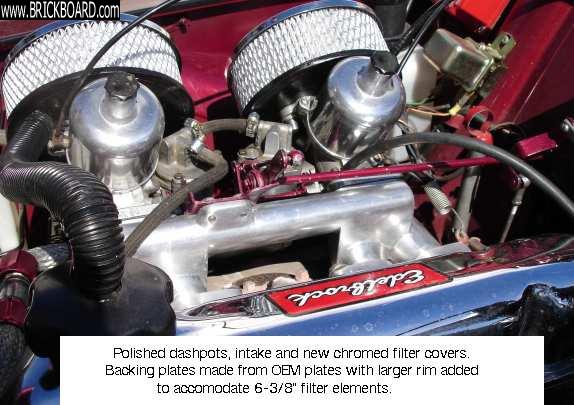
If you're still using the Carter SU carburetors, invest some time into learning how to service them. Most tune-up shops don't have a clue, so they tend to ignore the vital adjustments required every few thousand miles. There's not much to the SU carbs, and they are extremely easy to clean and adjust.
Here's a little-known trick: the little black cap opn the top of the carbs' vacuum chambers are supposed to have damping oil in them. This oil regulates the amount of gasoline in the fuel mixture when accellerating. The 'usual' oil is power steering fluid or transmission fluid. It will look somewhat red, depending on how long it's been in there. The DENSER the oil in the dashpots, the MORE fuel in the mixture during accelleration. I use 40wt motor oil, and it works great!
So - basically, we need to take some time with our cars' engines every few months and make sure that we don't have nasty carbon buildup in the combustion chambers, that the spark pugs are clean, the timing is set correctly, and our finicky SU carbs are clean and happy with fresh oil.
One last thing...I've been asked how come carbon builds up inside the engine. The answer is usually because the car hasn't been driven at high enough speeds to allow the carbon to burn off and blow out the exhaust. If you don't want to pour a chemical into your carburetors, try getting out on an open stretch of freeway and running the car up to 70-75 mph for 10 or 15 minutes.
You may see a lot of gray smoke (carbon being burned off) and the engine may feel sluggish for a few minutes. Once the carbon is gone, your car will be a lot happier!
You asked for it!
"Baron of Greymatter"
|